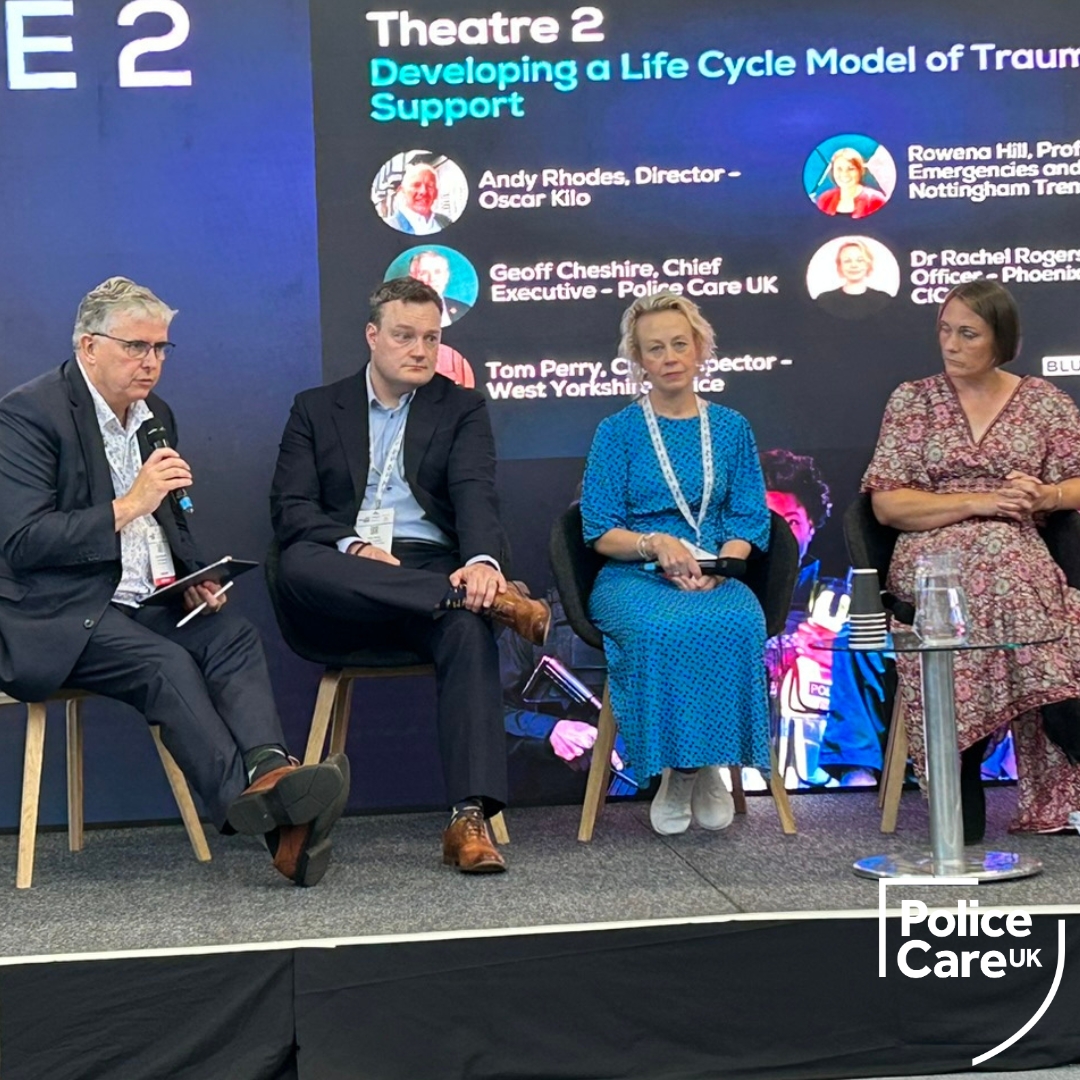
Police Care UK Chief Executive Geoff Cheshire joined experts from across policing, academia and trauma support at The Blue Light Show to explore one of the most significant challenges facing the police community – the impact of trauma and how we can better support people throughout their policing journey.
Drawing on Police Care UK’s work and research into trauma in policing and goal to develop a holistic life-cycle model of trauma support, the discussion focused on what effective, evidence-informed support should look like from recruitment through to leaving the service and beyond.
Joining Geoff on the panel were Chief Inspector Tom Perry of West Yorkshire Police, Phoenix Trauma Solutions CIC Chief Executive Dr Rachel Rogers and Professor Rowena Hill, Professor of Resilience, Emergencies and Disaster Management at Nottingham Trent University.
Together, they shared insights from frontline policing, clinical practice and research, examining how blue light organisations – specifically those supporting policing – can better understand, identify and respond to the impact of trauma.
The conversation highlighted the scale of the challenge.
Research suggests between 8% and 20% of police personnel will experience symptoms associated with PTSD during their career, equating to tens of thousands of individuals across UK policing.
Beyond the personal impact on individuals and their families, trauma-related absences, occupational health costs and workforce attrition carry a significant financial burden for police forces – approximately £120m per year, collectively.
A central theme throughout the discussion was the importance of early intervention with the panel agreeing supporting people before difficulties become entrenched offers the best opportunity to improve outcomes.
Equally important is timely access to appropriate treatment and ensuring individuals have confidence in the organisations and services designed to support them.
Emphasising addressing trauma cannot be the responsibility of any single organisation, Geoff called for a joined-up and coordinated approach to bring together police forces, emergency service partners, healthcare providers and third-sector organisations to create a seamless pathway of support.
By working collaboratively, organisations can help ensure that individuals receive the right support at the right time, wherever they are in their recovery journey.
Tom Perry shared how West Yorkshire Police has embedded the Police Traumatic Events Checklist, developed by Police Care UK, into routine trauma screening processes.
Supported by Power BI technology, the approach enables the force to identify trends, analyse debrief information and better understand the cumulative impact of trauma across its workforce.
It represents an innovative, data-informed approach to recognising risk and supporting wellbeing proactively and will be rolled out to more forces in the near future.
Offering a clinical perspective, Dr Rachel Rogers explored the stigma that can still prevent people from seeking help.
She spoke about the challenges of under-reporting symptoms, barriers to accessing treatment and the risk of well-intentioned interventions inadvertently exacerbating distress.
Dr Rogers highlighted the need for a more integrated approach to care, enabling individuals to move smoothly from identification and assessment through treatment, recovery and, where appropriate, a supported return to work.
Professor Rowena Hill brought valuable insight from her work with the Fire and Rescue Services, while recognising the unique pressures faced by policing.
She spoke about the need to understand emergency responders as whole people, not simply employees, noting that the pressures experienced in work often extend well beyond the workplace.
As Professor Hill explained, “work is home and home is work” for many emergency responders, with stressors and pressures affecting all aspects of life.
She highlighted the importance of creating a diverse range of support options that enable people not only to remain operationally effective, but to thrive both professionally and personally. Importantly, she also stressed the need to look beyond trauma alone and recognise the impact of anxiety, depression and moral injury.
Following questions from the audience, Geoff closed the session with a clear challenge – if policing is to reduce the long-term impact of trauma, the focus must extend beyond treatment and recovery.
Greater emphasis is needed on prevention, resilience, early identification and creating environments where people feel supported to seek help before they reach crisis point.
Away from the stage, the Police Care UK team enjoyed connecting with colleagues from across the blue light sector, sharing learning, building relationships and showcasing the charity’s work to reduce the impact of physical and psychological harm within the police community.
The Blue Light Show provided a valuable opportunity to strengthen partnerships, exchange ideas and advance conversations that matter.
The collective commitment to improving support for those who dedicate their lives to keeping our communities safe was inspiring.